
Monday, October 28, 2013
Togo
This week I will be discussing Togolese cuisine. Togolese is very similar to Nigerian, Ghanian, and Sierra Leone Cuisines. Togolese cuisine has been influenced by the country’s colonial legacy and that made Togolese cuisine renowned throughout the West Africa. Togolese cuisine is a combination of African and French culinary styles, combining rice's, sauces, fish, meat and vegetables in order to serve traditional dishes, like koklo meme, grilled Chicken with a spicy chili sauce, pâté, made from millet, plantains, corn or manioc, riz sauce d’arachide, simply rice with Peanut sauce, and other sauces based on Eggplant, tomato, fish or spinach. Typical in all Africa, palm wine and beer are also common in Togo. I have never eaten Togolese food before, maybe because majority of there cuisines are very similar to my homeland cuisine. One of the most common foods in Togo is fufu and its preparation is a communal ritual. Fufu is eaten with sauces, which are usually made of vegetables like okra, ademe and spinach. Sauces can also be made of meat, mostly with smoked fish and they are served at almost every meal. Other meats eaten in Togo include fish heads, cow’s skins and large bush rats. Groundnuts, palm nuts and cassava are milled into flour and shaped into a pate called kokonte. Pates are also served with sauces. Generally Togolese cuisine is rich on sauces and pates. Hope you all try out something knew in your kitchen. Bon Appetite!!

Tuesday, October 22, 2013
Sierra Leone: Oleleh, Agidi
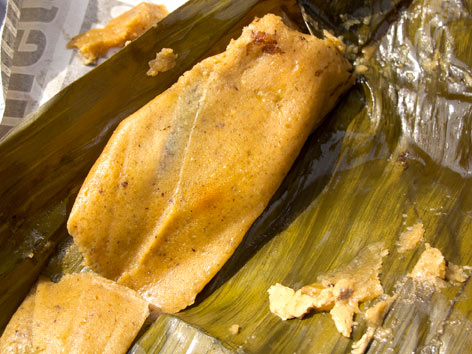
Now on to the well know Sierra Leone. This dish that I will be talking about is called Oleleh, Agidi. This dish is a popular cuisine to all Sierra Leone citizens. Sierra Leone is an African state with various rivers and cascades, among fields and high platforms. The agricultural plantations are set on wide territories and the most significant products are coffee, rice, cocoa, coconut palms, manioc and citrus fruits. Being representative for the African cuisine, the Sierra Leonean cuisine includes cassava, yams, plantains, bananas, red palm oil, peanuts and other fruits and vegetables. Meat is best represented by fish, which is found in the coastal areas. Okay, enough history on Sierra Leone. Oleleh is a custard-like snacks traditionally wrapped and
steamed in kola or banana leaves, tamale-like are two of the more interesting
street foods you’ll find in Freetown. Oleleh, shown in the picture below, is made of
ground binch, or black-eyed beans, along with palm oil, onion, and
various seasonings; while the sweeter yellow-colored agidi is made with
pounded corn. Both are soft and moist, though the agidi is more gelatinous in
texture. Agidi is not just a favorite for Sierra Leoneans but also for Nigerians. Us Nigerians call the Agidi Moi Moi.When Nigerians make moi moi at home/America we use foil instead of leaves so cook it because we don't have the ingredients here in America. Hope you try out this amazing dish. Bon Appetite Luvs!
Cameroon: Kondre
Many of my friends are from Cameroon, once you all read my blog you will fall in love with this dish call Kondre. Kondre, is a traditional dish from the West Region of Cameroon, Bafang precisely, is as authentic as they come. For the Bamilikes of old, Kondre was a ceremonial dish usually reserved for grande and significant events such as traditional weddings, baby welcoming and funerals. Today however, though still a must for major cultural and social celebrations, Kondre can still be prepared even on a regular day at home. Growing up, this was one of our favourite dishes and my Aunta real Bafang chica knew what was up. She made the meanest, baddest Kondre ever that had everyone licking their fingers and asking for more! So of course, when I had to cook Kondre for that very special august visitor, who else could I turn to than my trusted Aunt and one of the best cooks I know for the recipe? As it is most of the time, the apprentice can hardly ever measures up to the master and I tell you I tried, believe me, I really tried, but my kondre was not up to part. You, on the other hand may have better luck so go ahead and give it a try. Kondre is usually prepared with either goat, pork or chicken. In this recipe, I used pork since I do not eat chicken, yes I said it I don't eat chicken. Anyway feel free to use any meat of your choice.
Bon Appetite Luvs!

Bon Appetite Luvs!
Monday, October 14, 2013
Ghanian Food: Jollof Rice
I haven’t come across any Ghanaian food that I haven’t
enjoyed. I haven’t tried everything yet, but it is important to keep an
open-mind when it comes to local food and preparation. Keeping an open-mind is
essential to trying new food but you should also know your limits. Ghanaian
food is mostly like Nigerian food. It is often served with all sorts of starchy
food, loaded with carbohydrates which can quickly fill you up or such diets
being unsuitable for you if you are not used to it. I find that the combination
of sides and the Ghanaian proportions make it impossible to finish a meal in
one sitting.

The dish consists of easy cook or basmati rice, tomatoes and
tomato paste, onion, salt, spices (such as nutmeg, ginger, Scotch bonnet
(pepper), cumin) and chili pepper, to which optional ingredients can be added
such as vegetables, meats and fish.The cooking method for Jollof rice begins
with using oil to fry finely-chopped onions, tomatoes and ground pepper (plus
any other optional seasoning); adding stock; and then cooking the rice in this
mixture so it takes up all the liquid. The rice takes on a characteristic
orange colour from the mixture. It can be served with cooked meat, chicken,
fish,or vegetables separately on the plate or they can be stirred in at the
end. It is often served with fried plantain and salad. Jollof Rice, also called
'Benachin' meaning one pot in
the Wolof Language, is a popular dish in many parts of West Africa.
It is thought to have originated amongst members of the Wolof ethnic
group in the Senegambia region but has since spread to the whole
of West Africa, especially Nigeria, Togo, Ghana, Sierra Leone and Liberia.
There are many variations of Jollof rice. The most common basic
ingredients are rice, tomatoes and tomato paste, onion, salt, and red pepper.
Beyond that, nearly any kind of meat, vegetable, or spice can be added.
Ethiopian Cuisine: Wat
Today I will be writing on the enjoyment of the famous meal wat from Ethiopia. Many of you may have went to an Ethiopian restaurant and the first thing they serve is wat. Wat is typically served with meat stew, known as wat, along with vegetables, placed on top of a crepe-looking spongy bread called injera. You eat with your hands, using the injera to pick up the food. Below is a picture of how wat is served, it actually has some recipes that Nigerians eat. Such as the greens which Nigerians eat with pounded yam or fufu. I've actually had the opportunity to go to an Ethiopian restaurant in D.C, I cant remember the name of the restaurant but it was awesome. The flavors of each dish that I ordered was delicious and spicy! It’s a fabulous experience, and one I highly recommend to either go out to an Ethiopian restaurant or do it yourself at home.Bon apetit!


Tuesday, October 8, 2013
The Enjoyment of Beef Suya: Nigeria
Suya is an all time Nigerian favorite and it is gaining much popularity internationally, as was quite evident in one recent CNN documentary/report. Suya is so popular, you find a mai suya (suya vendor) on every street corner you turn in major Nigerian towns and cities!As we all know, quite simply, suya refers to any meat seasoned with the unique blend of traditional Nigerian spices and condiments, collectively called Yaji, and barbecued over hot smoky fire. Even though we are more familiar with the more popular beef suya, nowadays, there is chicken suya, fish suya and even veggie suya. Despite its popularity, suya has always been a snack food, something to eat on the side, (I know that sometimes it may be eaten with some soaked garri)... I find nothing wrong with this, I just got wondering whether truly, there can be a way that suya can be served as a main dish of sort....or maybe as a light lunch or dinner.

Subscribe to:
Posts (Atom)